01 // The Standard Model as Engineering Target
SEVENTEEN PARTICLES — FOUR ACCESSIBILITY TIERS
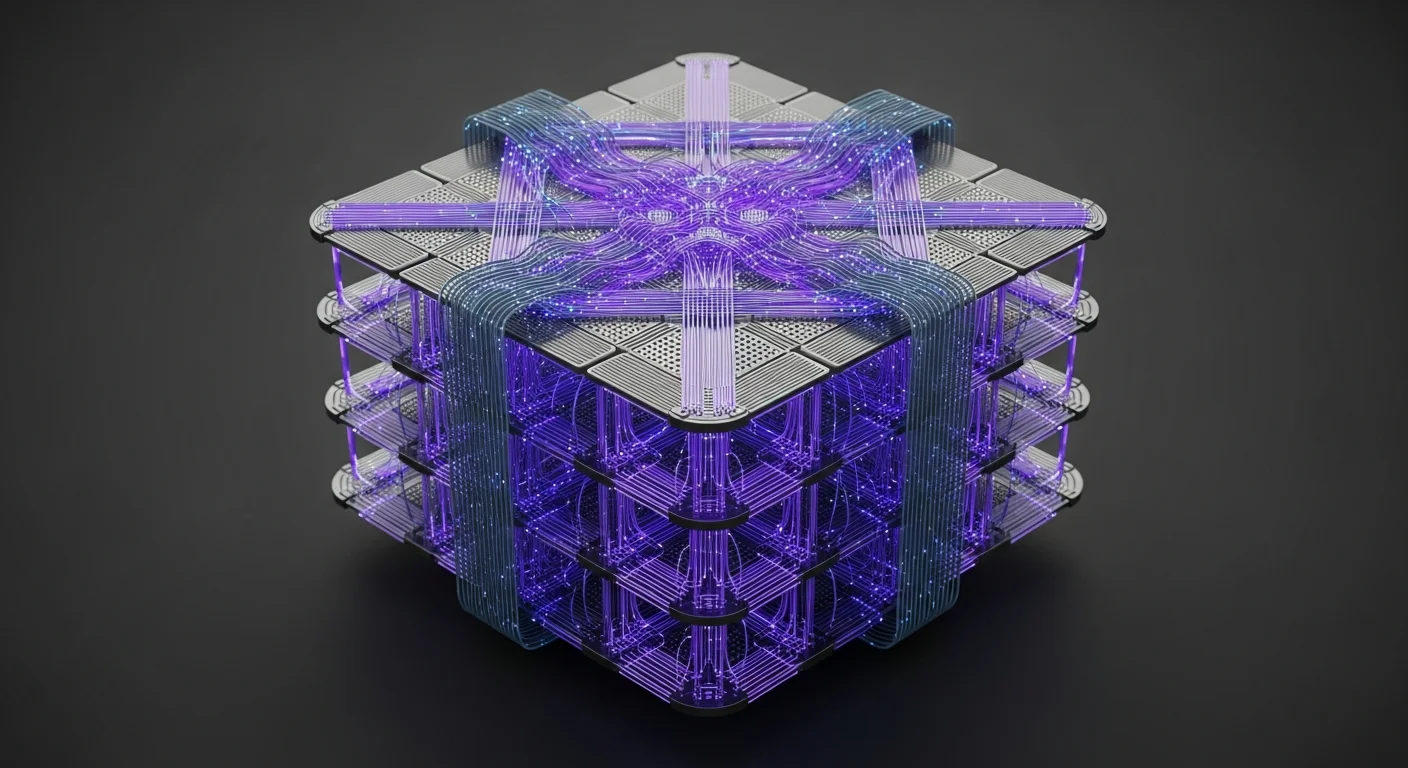
For the purposes of the Aetheric Sciences research program, the seventeen Standard Model particles are organized into four engineering tiers based on the infrastructure required to achieve individual isolation and control. The tiers do not reflect the theoretical importance of the particles. They reflect the practical difficulty of working with them outside a high-energy collider environment.
| TIER | PARTICLES | ENERGY SCALE | CONTROL METHOD | STATUS |
|---|---|---|---|---|
| 1 | Electron, Photon | eV | NV-center trapping, photonic waveguides | Shipping |
| 2 | Muon, Electron neutrino, Muon neutrino | MeV | Magnetic confinement, cryogenic detection | Laboratory |
| 3 | Tau, Tau neutrino, Up, Down, Strange, Charm quarks, Gluon, W±, Z° | GeV | Plasma confinement, accelerator-derived beams | Research |
| 4 | Top, Bottom quarks, Higgs boson | 100+ GeV | Requires dedicated high-energy infrastructure | Theoretical |
Tier 1: Electrons and Photons (eV scale). These particles are stable, low-energy, and individually addressable with existing solid-state and photonic technology. An NV center in diamond traps a single electron indefinitely at room temperature. A photon propagates through a waveguide without interacting with adjacent photons. Both particles can be initialized, manipulated, and read out using commercially available laser and microwave sources. All current Aetheric Sciences products operate at this tier.[2]
Tier 2: Muons and Neutrinos (MeV scale). The muon is an unstable lepton with a mean lifetime of 2.2 μs. It is produced naturally by cosmic ray interactions and artificially by pion decay at accelerator facilities. Individual muon control requires magnetic confinement at field strengths achievable by Highfield Magnetics superconducting solenoids. Neutrinos interact only via the weak force and have extraordinarily small interaction cross-sections; detection — let alone control — of individual neutrinos requires kiloton-scale scintillator volumes or equivalent. Tier 2 represents the boundary between solid-state and accelerator-based particle engineering.[3]
Tier 3: Quarks, Gluons, and Heavy Bosons (GeV scale). Quarks do not exist in isolation under normal conditions; they are confined within hadrons by the strong force. Individual quark control requires either quark-gluon plasma conditions (temperatures exceeding 1012 K, achievable in heavy-ion collisions) or novel confinement geometries that have not yet been demonstrated outside collider environments. The W± and Z° bosons have lifetimes on the order of 10−25 seconds. Control at this tier means generating, confining, and extracting information from particles that exist for less than a yoctosecond. The energy densities required map directly to Stellar Furnace plasma confinement and Antimatter Production pair-creation programs.[4]
Tier 4: Top Quark and Higgs Boson (100+ GeV scale). The top quark has a mass of 173 GeV/c² and decays before hadronization — it is the only quark that can theoretically be studied as a bare particle. The Higgs boson has a mass of 125 GeV/c² and a lifetime of approximately 1.6×10⁻²² seconds. Controlled isolation of these particles requires energy infrastructure that does not currently exist outside of CERN-class facilities. Tier 4 defines the theoretical ceiling of the program. No product roadmap extends here. The physics is cataloged; the engineering awaits infrastructure that may require decades to develop.[5]