05 // Information Thermodynamics
LANDAUER'S PRINCIPLE — REVERSIBLE COMPUTING — THE PHYSICAL COST OF INFORMATION
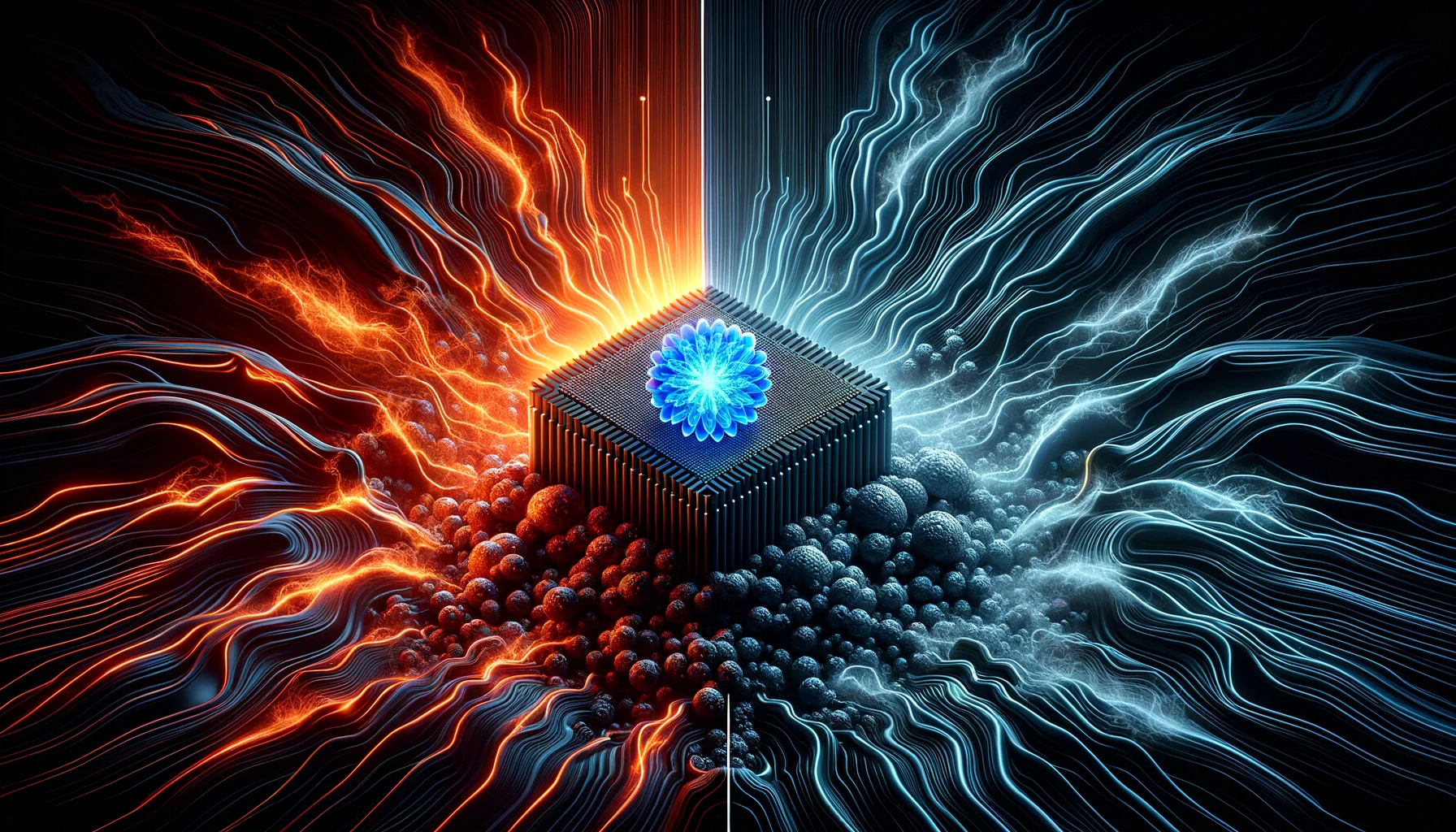
FIG 3.0: CLASSICAL vs. REVERSIBLE DISSIPATION PER LOGICAL OPERATION
In 1961, Rolf Landauer established the result that anchors the thermodynamic architecture of Aetheric Sciences: the erasure of one bit of information generates a minimum of kT ln 2 joules of heat, where k is Boltzmann's constant and T is the temperature of the system. This is a consequence of the second law of thermodynamics, not a limitation of any particular engineering implementation. Every time a classical processor overwrites a memory cell, it dumps entropy into the environment as waste heat.[9]
At the bulk-computing level, this dissipation is manageable — data centers allocate approximately half their energy budgets to cooling infrastructure. At the single-particle level, it is not manageable. A single Landauer erasure event at room temperature releases approximately 3×10⁻²¹ J of energy. This is small in absolute terms, but it is comparable to the energy scale of quantum coherence in an NV-center electron spin. At the particle level, an irreversible computation destroys the state it is attempting to control. Reversibility is not an efficiency optimization. It is a prerequisite for single-particle operation.
The Aetheric approach: reversible logic gates. Toffoli gates, Fredkin gates, and photonic beam-splitter networks are mathematically bijective — given the output, the input can be reconstructed. No information is destroyed. No entropy is generated at the logic layer. Charles Bennett proposed reversible computation in 1973. The missing element was a substrate capable of physically implementing reversible gates at scale without decoherence destroying the state before computation completes. Diamond photonics provides that substrate.[14]
Every AND, OR, NAND gate destroys one input bit. Entropy accumulates linearly with clock speed. At 1021 ops/sec the aggregate dissipation is kilowatts. Cooling infrastructure matches or exceeds compute infrastructure in cost and footprint. At single-particle scale, each erasure event risks decoherence of the controlled state.
Toffoli, Fredkin, and photonic beam-splitter gates preserve all input information. Net heat from logic operations approaches zero. Error correction, I/O boundaries, and control overhead still dissipate energy — the claim is sub-Landauer dissipation per logical operation, not zero total system power. Particle states survive the computation.
A secondary implication: if information has a minimum physical cost, then information is physical. Via E=mc² applied to the Landauer energy per bit, a fully loaded 1 TB storage device has approximately 10−17 grams more mass than the same device fully erased. The number is far below any current measurement threshold, but it is not zero. Information participates in the laws of thermodynamics. It has mass equivalence. This result, established by Vopson (2019), provides the theoretical basis for treating information as a physical quantity equivalent to matter and energy.[15]