10 // Cross-Division Integration
THE PARTICLE PROGRAM AS A DEPENDENCY TREE ACROSS AETHERIC SCIENCES
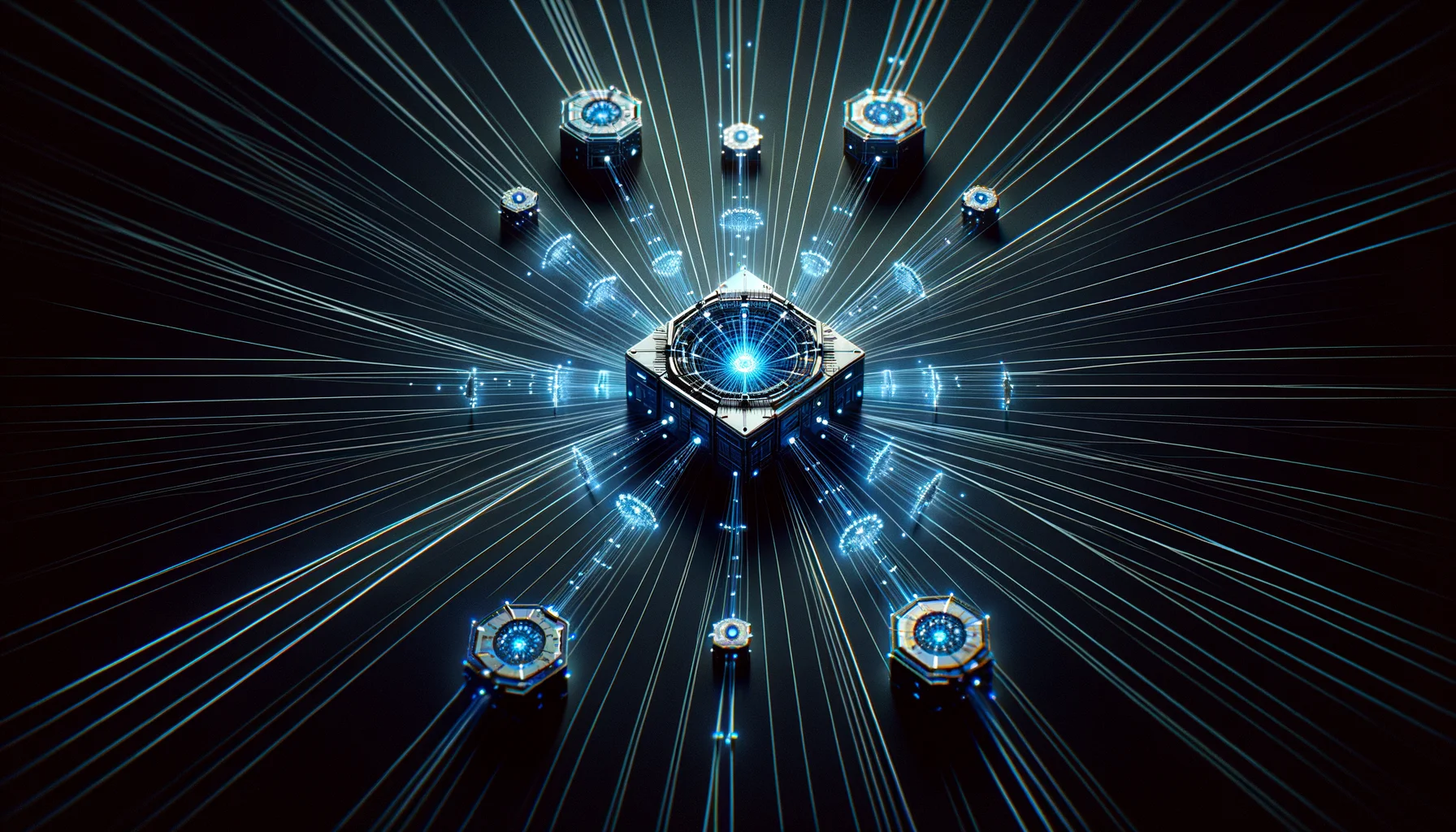
FIG 7.0: CROSS-DIVISION DEPENDENCY MAP — PARTICLE ACCESS BY DIVISION
The particle-control program reframes the relationship between Aetheric Sciences and other partner companies. At Tier 1, Aetheric operates independently — diamond substrates, photonic processors, and NV-center arrays require no external infrastructure beyond the CVD growth capacity of Metallic Sciences. At Tier 2 and above, Aetheric becomes dependent on sister divisions for the energy densities, confinement geometries, and detection infrastructure required to access heavier particles.
The divisions are not peers in this context. They are nodes in a dependency tree, with Aetheric Sciences as the integrating program and each sister division providing a specific capability required to advance up the particle tiers.
Enables: All Tier 1 products — Mote, Blade, Aetheric Processor
Particle access: Tier 1 — electron/photon compute
Particle access: Tier 1 — photonic matrix operations
Particle access: Tier 1 — predictive control loop faster than plasma instability timescales
Particle access: Tier 1 — photonic annealing for NP-hard combinatorial problems
Particle access: Tier 1 — reversible photonic logic at milliwatt power draw
Enables: Tier 3 quark-gluon plasma conditions for particle access above GeV scale
Enables: Tier 3 particle generation — individual antiparticle isolation is the inverse of the control problem
Enables: Muon magnetic confinement (Tier 2), charged hadron beam steering (Tier 3)
Provides: Biological particle interaction data (molecular-scale electron behavior) feeding back into Tier 1 optimization
Enables: Monolith BEC platform (Tier 2), long-horizon confinement geometries (Tier 3+), and the theoretical framework for Tier 4 particle coupling at Planck-scale energies
The network effect is directional. At Tier 1, Aetheric Sciences supplies computation to other divisions. At Tier 2 and above, other divisions supply infrastructure to Aetheric Sciences. The particle-control program inverts the division's role from service provider to integrator as it advances up the Standard Model.